
Daddy, Where Do Pickles Come From?

Sit down my dear and let me tell you a story: of how a 4,000 year-old savory delight withstood the test of time, and popularized one of the most effective preservation methods humans ever discovered.
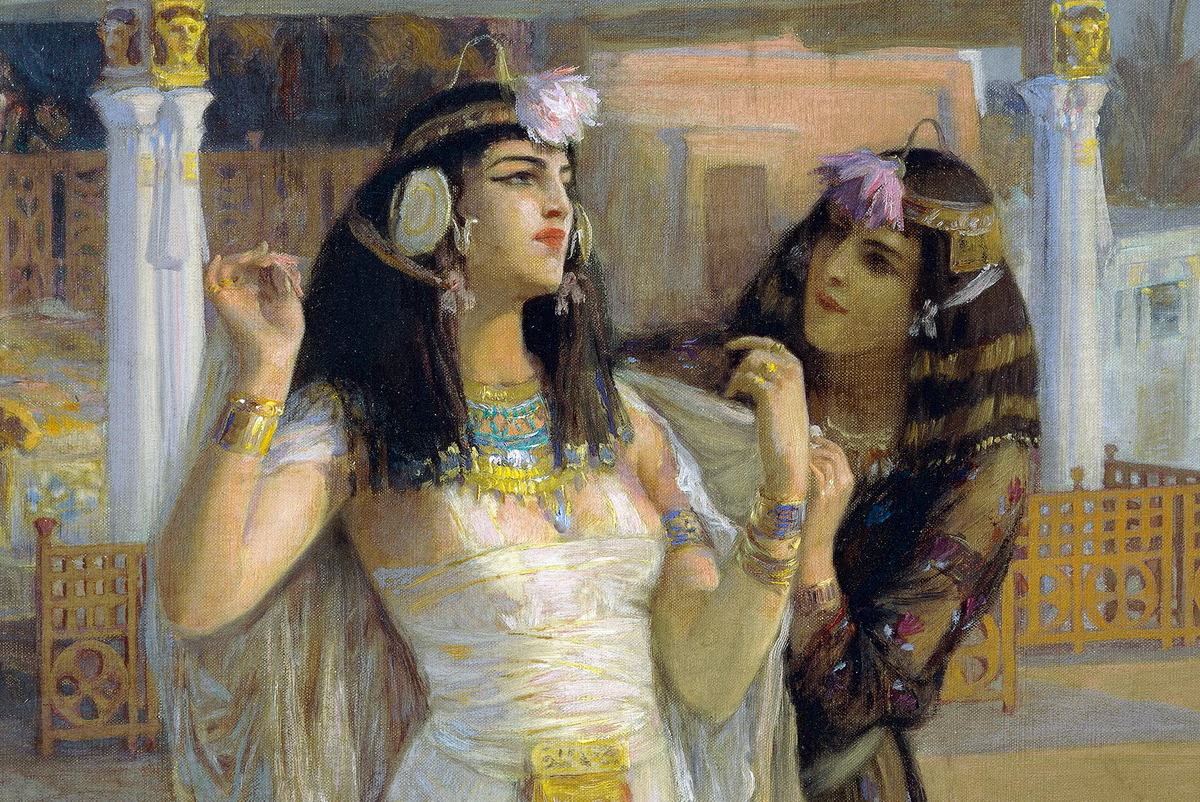
Pickling, the process of preserving foods in vinegar or salt brines, dates back to at least 2400 B.C. making it one of the oldest known methods of food preservation. Ancient Mesopotamians pickled their vegetables to extend their shelf life. Many centuries later, word spread of the power of pickles and Queen Cleopatra of Egypt brought them into mainstream fashion, crediting pickles as her secret to good health and everlasting beauty. (Does this mean pickles were the first ever celebrity beauty trend? Perhaps.) Between 45-58 B.C. Cleopatra’s lover Julius Caesar and other Roman emperors started giving pickles to their troops, believing they would invoke strength and fervor in battle. TLDR: When your girlfriend makes a recommendation, she’s probably right.
A pickle at sea turned out to be a good idea, too. In the 15th century, as the Golden Age of Exploration commenced, sailors needed provisions for long voyages. The dried foods typically brought aboard weren’t exactly nutrient dense, and the threat of scurvy loomed. Enter: Amerigo Vespucci, otherwise known as, "The Pickle-Dealer of Seville.”
Vespucci worked as a ship chandler, selling supplies to seamen on their way to the New World. He peddled shelf-stable goods and became known for his pickled cucumbers and cabbage and preserved meat and fish. But there was one client who would launch Vespucci’s name to fame: an intrepid explorer named Christopher Columbus. Vespucci supplied Columbus’s expeditions — some more successful than others — across the Atlantic with, none other than, his famous pickles, setting off a chain of events that would change American history.
Vespucci was known to over-exaggerate his contributions to the discovery of the new world. He would brag that he was the sole explorer to identify Brazil as part of a fourth continent unknown to Europe (aka the “New World”) unlike Columbus’ belief that the land was part of Asia. The claim inspired the German cartographer Martin Waldseemüller to apply the Latinized form of Vespucci’s name, "America" to a map of the New World in 1507. When Waldseemüller learned of his mistake, that Vespucci did not in fact discover America, he redacted his name from future maps, but it was too late. The name had stuck among other cartographers, making America technically named after, that’s right, a pickle dealer.
From ancient Mesopotamia to New York deli counters, pickles have shaped culinary cultures across the globe.
So there you have it. That’s where pickles come from, sweetheart. Now finish your blue raspberry Warhead pickle juice and off to bed.
By: Rachel Manson
